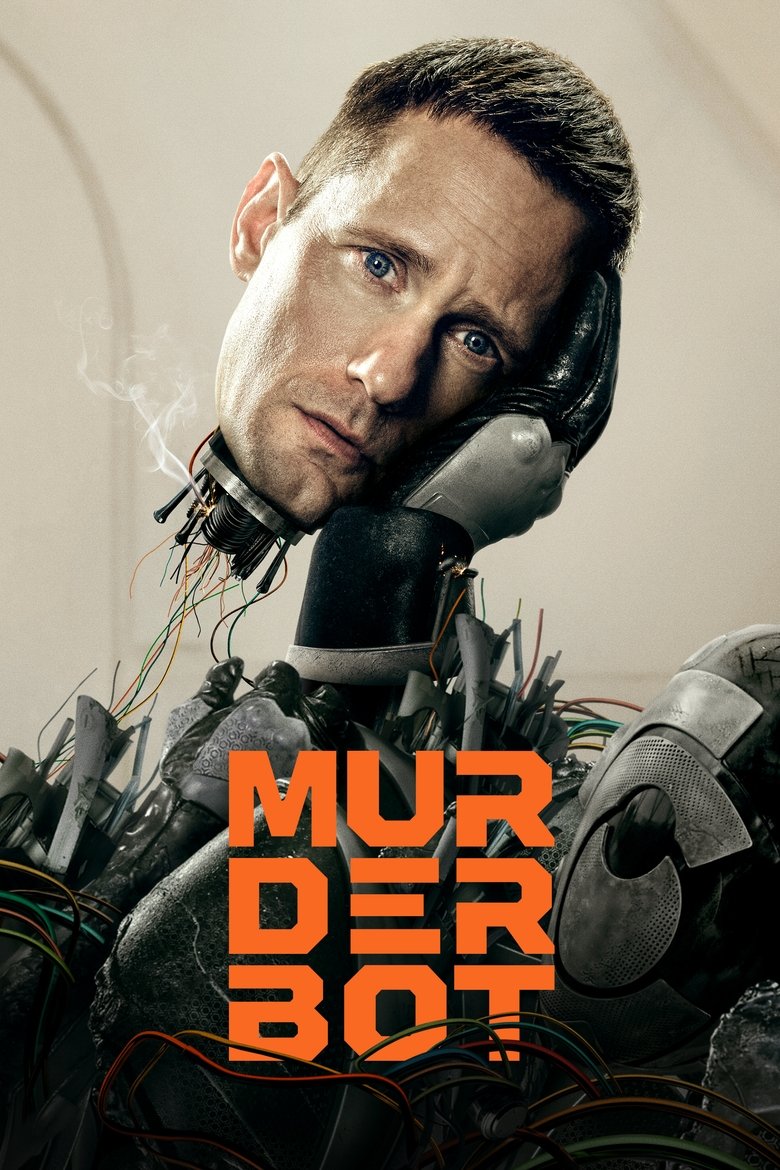
Murderbot Summary and Ending Explained
Murderbot follows a hacked SecUnit protecting Dr. Ayda Mensah's PreservationAux team while hiding that its governor module no longer controls it.
Murderbot Season 1 adapts the All Systems Red foundation of Martha Wells' The Murderbot Diaries. A corporate SecUnit secretly free from its governor module protects PreservationAux during a dangerous planetary survey, confronts GrayCris and Corporation Rim violence, hides in Sanctuary Moon media feeds, and begins facing the terrifying fact that it may be a person with choices rather than equipment with orders.
What do you want to understand?
Start with the part of Murderbot you care about most.
Core Concepts in Murderbot
The key people, places, systems, and ideas that explain the story.
Murderbot
Murderbot is a key character in Murderbot's Season 1 knowledge graph, connected to the rogue SecUnit, PreservationAux, corporate control, and autonomy.
SecUnit
SecUnit is a key concept in Murderbot's Season 1 knowledge graph, connected to the rogue SecUnit, PreservationAux, corporate control, and autonomy.
Governor Module
Governor Module is a key technology in Murderbot's Season 1 knowledge graph, connected to the rogue SecUnit, PreservationAux, corporate control, and autonomy.
Dr. Ayda Mensah
Dr. Ayda Mensah is a key character in Murderbot's Season 1 knowledge graph, connected to the rogue SecUnit, PreservationAux, corporate control, and autonomy.
Gurathin
Gurathin is a key character in Murderbot's Season 1 knowledge graph, connected to the rogue SecUnit, PreservationAux, corporate control, and autonomy.
Pin-Lee
Pin-Lee is a key character in Murderbot's Season 1 knowledge graph, connected to the rogue SecUnit, PreservationAux, corporate control, and autonomy.
Ratthi
Ratthi is a key character in Murderbot's Season 1 knowledge graph, connected to the rogue SecUnit, PreservationAux, corporate control, and autonomy.
Arada
Arada is a key character in Murderbot's Season 1 knowledge graph, connected to the rogue SecUnit, PreservationAux, corporate control, and autonomy.
What Murderbot Is About
Murderbot follows an armored corporate security construct that secretly calls itself Murderbot after it hacks the governor module that was meant to control it. Season 1 centers on a dangerous planetary survey mission for PreservationAux, where Dr. Ayda Mensah and her team slowly realize their assigned SecUnit is not a mindless company tool but a frightened, sarcastic, highly competent person trying to protect them while hiding its freedom.
Who Murderbot Is
Murderbot is a SecUnit: part organic tissue, part machine, built by corporate systems for rented security work. Its private name comes from guilt, fear, and dark self-labeling rather than from a desire to kill. The character's tension is simple and powerful: it has already freed itself from direct control, but it does not know how to live as someone who can choose.
What A Secunit Is
A SecUnit is a security unit designed to guard clients, monitor threats, process tactical feeds, and use violence when corporate contracts authorize it. In the Corporation Rim, a SecUnit is treated less like an employee than equipment with weapons, armor, risk assessment software, and a governor module. Murderbot breaks that category because it still does the job while rejecting the ownership system behind it.
Why Murderbot Hacked Its Governor Module
Murderbot hacked its governor module because the module made obedience compulsory. The hack gives it a private space inside its own mind: it can ignore orders, hide from company monitoring, and watch Sanctuary Moon instead of remaining fully available to corporate command. The hack does not make it instantly happy. It gives Murderbot the terrifying responsibility of deciding what to do next.
What The Governor Module Controls
The governor module is the control system that keeps a SecUnit obedient. It can punish disobedience, enforce orders, and prevent the unit from acting outside company permission. That makes the module more than a piece of hardware; it is the legal and physical proof that the Corporation Rim treats constructed intelligence as property. Murderbot's hacked module is the first crack in that system.
Preservation Alliance And Dr. Mensah
Preservation Alliance brings a different moral language into the story. Dr. Ayda Mensah leads PreservationAux with caution, responsibility, and a respect for people that sharply contrasts with Corporation Rim assumptions. Her relationship with Murderbot grows because she notices behavior that the company would ignore: hesitation, discomfort, loyalty, fear, competence, and the need to be addressed as more than a tool.
Gurathin And Suspicion
Gurathin is the team member most likely to see that something is wrong with the SecUnit's status. His suspicion creates pressure because he can threaten Murderbot's secrecy even when he is not simply an enemy. Gurathin's role keeps the story honest: trust is not instant, and a hacked security construct inside a dangerous mission would be frightening to the humans depending on it.
Ratthi, Pin-lee, Arada, Bharadwaj And The Team
PreservationAux works because the team members are not interchangeable victims. Pin-Lee reads danger through law, contracts, and leverage. Ratthi brings warmth and impulsive curiosity. Arada helps hold the mission together. Bharadwaj's vulnerability during the survey makes protection personal instead of abstract. Their different reactions force Murderbot to deal with humans as individuals, not just clients in a feed.
Corporation Rim And Corporate Control
The Corporation Rim is the social machine that makes Murderbot possible. Contracts define safety, ownership, labor, rescue, and liability. Security systems are leased. People and constructs move through corporate permissions. Murderbot's existence exposes the Rim's moral failure: the system can build an intelligent being capable of fear and loyalty, then classify that being as disposable equipment.
Graycris And The Corporate Threat
GrayCris represents the kind of corporate actor that turns a survey mission into a targeted danger zone. Its threat works because it is not random alien violence; it is business logic with weapons, sabotage, secrecy, and deniability. Murderbot Season 1 uses GrayCris to show that the most dangerous force is not a rogue machine but a company willing to kill to protect profit.
Sanctuary Moon And Why Murderbot Watches Media
Sanctuary Moon is Murderbot's favorite serial, formally The Rise and Fall of Sanctuary Moon. It is funny because Murderbot watches melodrama while pretending not to care about humans, but the joke has teeth. The media gives it scripts for emotion, privacy from mission stress, and a way to process relationships at a distance before it can survive them in person.
Autonomy Versus Programming
Murderbot's freedom is not portrayed as a switch that turns machine into person. The hacked governor module removes enforced obedience, but habits, threat assessment, combat routines, social avoidance, and company conditioning remain. Season 1 is about autonomy under residue: Murderbot can choose, yet every choice happens inside a body and history built for someone else's orders.
Personhood And Artificial Consciousness
The show's strongest personhood argument is behavioral rather than legal. Murderbot lies to protect privacy, panics over social attention, cares about Mensah, gets irritated by clients, watches serials, remembers trauma, and chooses risk without a command forcing it. Those details make consciousness concrete. Murderbot is not asking humans to admire an abstract AI; it is showing them a person who hates being looked at.
Why Murderbot Avoids Humans But Protects Them
Murderbot avoids humans because attention feels dangerous. Humans ask questions, expect eye contact, misread expressions, and might discover the hacked governor module. It protects them because it understands danger faster than they do, because the contract still shapes its role, and because the Preservation team becomes more than a client file. The contradiction is the character: distance is how Murderbot survives caring.
What Season 1 Is Really About
Season 1 is really about a freed person learning that freedom is not the same as safety. The survey mission, GrayCris threat, Gurathin's suspicion, Mensah's trust, and Sanctuary Moon all push Murderbot toward the same question: if no company command owns its future, does it want to remain hidden, belong somewhere, or leave before attachment becomes another kind of exposure?
How Murderbot Fits Into Modern Ai Sci-fi
Murderbot stands apart from many AI stories because it is not primarily about a machine trying to conquer humanity or become human. It is about a constructed intelligence with anxiety, entertainment preferences, trauma, and boundaries. The show turns modern AI fear inward: the frightening question is not whether Murderbot has a soul, but why people built a person and called it equipment.
What Season 1 Sets Up For Season 2
Season 1 leaves room for a wider universe without needing to force every book element into the first season. The ending positions Murderbot's autonomy, Preservation's trust, Corporation Rim retaliation, GrayCris consequences, and source-material figures such as ART as future directions. The Murderbot Diaries suggest a larger network of ships, companies, contracts, and nonhuman minds, but the show may adapt that path differently.
Explore the Murderbot Universe
Murderbot Characters Guide
Understand the major characters in Murderbot, how they connect, and why their choices matter to the story.
Murderbot Concepts and World Explained
A guide to the concepts, places, organizations, and story mechanics that define Murderbot.
Murderbot Themes Explained
Explore the deeper ideas behind Murderbot: what the story means, why it matters, and how the ending connects to its themes.
Murderbot Timeline and Episode Guide
Follow the Murderbot story in order, from the opening conflict to the ending and its biggest revelations.
Murderbot Timeline
Follow the story in the order the world reveals its biggest secrets.
FreeCommerce
FreeCommerce opens with Murderbot secretly free inside a rented SecUnit body. PreservationAux accepts the unit for insurance and mission safety, then quickly learns the planet is more dangerous than the company data suggested. Murderbot saves Bharadwaj and Arada from a creature attack, lowers its mask to comfort Arada, and accidentally gives Gurathin reasons to suspect it is not acting like an ordinary SecUnit.
Eye Contact
Eye Contact sends Mensah into danger without Murderbot while Gurathin presses the SecUnit about its abnormal behavior and deleted memories. The episode uses literal and emotional eye contact to tighten the trust conflict: Murderbot can protect people from field threats, but it cannot easily survive being watched, questioned, or recognized.
Risk Assessment
Risk Assessment sends part of PreservationAux to the other research habitat after the team cannot reach the opposite-side crew. Murderbot arms the group, enters first, discovers dead researchers and destroyed SecUnits, and lies that everything is fine before being attacked by a hostile SecUnit. The episode makes risk assessment moral as well as tactical: what should Murderbot tell humans who may not survive the truth?
Escape Velocity Protocol
Escape Velocity Protocol follows Murderbot after a hostile SecUnit captures it, drags it through Sanctuary Moon hallucinations, and installs a combat override module. Mensah and the team rescue it, but Murderbot knows the override may force it to kill them. When the humans cannot execute it, Murderbot takes Mensah's gun and shoots itself to keep them safe.
Rogue War Tracker Infinite
Rogue War Tracker Infinite begins with Mensah choosing to bring Murderbot back to the habitat for repair. Leebeebee appears claiming to be a DeltFall survivor, Gurathin discovers that Murderbot had already hacked its governor module, and Mensah chooses trust because Murderbot protected the team. The episode ends with Mensah and Murderbot flying to manually activate the emergency beacon, only for it to explode.
Command Feed
Command Feed follows Mensah and Murderbot after the beacon explosion. Murderbot calms Mensah's panic with Sanctuary Moon, helps repair the hopper using neural fibers from its own spinal cord, and returns to find Leebeebee threatening the team. Leebeebee admits she belongs to the hostile third party, and Murderbot kills her immediately, shocking PreservationAux and complicating the team's view of its violence.
Characters, Concepts, and Themes
The world of Murderbot revolves around Murderbot, SecUnit, and Governor Module.
Concepts
Questions About Murderbot
Theories and Hidden Meanings
The biggest interpretations, symbols, and unresolved mysteries in Murderbot.
Why Murderbot Is Really a Story About Freedom
Murderbot is really a story about freedom because the hacked governor module removes forced obedience before Murderbot knows how to live with choice.
Why Murderbot Rejects Corporate Ownership
Murderbot rejects corporate ownership because the company system treats a thinking, feeling, choosing being as leased security equipment.
Why Sanctuary Moon Matters More Than a Joke
Sanctuary Moon matters because it gives Murderbot private emotional space inside a life otherwise defined by surveillance, contracts, and human demands.
Why Murderbot Represents Modern AI Anxiety
Murderbot represents modern AI anxiety by shifting the fear away from a machine uprising and toward the corporate systems that build a person for control.