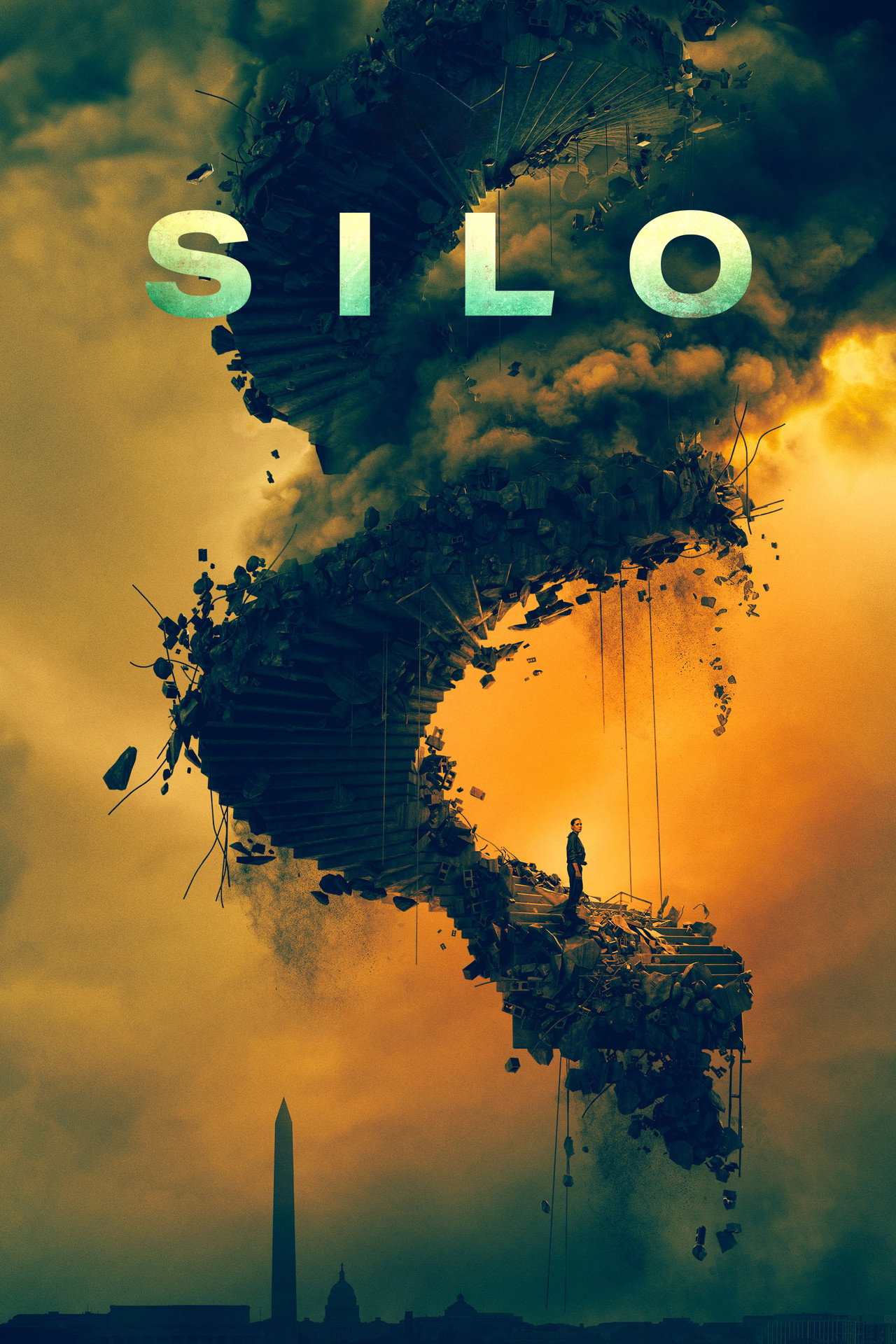
Silo Summary and Ending Explained
Silo begins as a murder mystery inside one underground society and expands into a story about multiple silos, engineered memory, rebellion, and a system designed to survive by controlling truth.
Silo follows Juliette Nichols, an engineer who becomes sheriff after a chain of suspicious deaths reveals that Silo 18 has erased its history and manipulated its citizens. Season 1 ends with Juliette surviving outside and discovering many other silos. Season 2 splits the story between Juliette in the ruined Silo 17, where she meets Solo, and a growing rebellion inside Silo 18. Bernard tightens control while Lukas decodes hidden records and discovers the Safeguard protocol. Juliette returns to warn her people that the outside is genuinely toxic, and the season ends with her and Bernard trapped in a burning airlock while a flashback to Daniel and Helen points toward the origin of the silos.
What do you want to understand?
Start with the part of Silo you care about most.
Core Concepts in Silo
The key people, places, systems, and ideas that explain the story.
Juliette Nichols
Juliette Nichols is the engineer who becomes sheriff and uncovers the silo's hidden system of surveillance, murder, and deception.
Bernard Holland
Bernard Holland is the head of IT and one of the key figures protecting the silo's hidden control system.
Robert Sims
Robert Sims is an enforcer of the silo's hidden order, using Judicial power and surveillance to protect the system.
Allison Becker
Allison Becker is the first major character to openly challenge the silo's official reality after discovering forbidden evidence.
Holston Becker
Holston Becker is the sheriff whose grief and doubt connect Allison's discovery to Juliette's investigation.
George Wilkins
George Wilkins is the relic hunter whose death pushes Juliette into the silo's hidden conspiracy.
Martha Walker
Martha Walker is a Mechanical engineer whose knowledge and loyalty help Juliette survive the cleaning ritual.
Paul Billings
Paul Billings is a deputy whose loyalty to the Pact is tested by Juliette's investigation and the silo's hidden truth.
Silo Season 1 Is About A Society Controlled By Fear, Secrecy, And False History
Silo Season 1 begins inside a massive underground structure where the remaining human population believes the outside world is toxic and uninhabitable. The people follow strict laws, avoid forbidden relics, and accept that anyone who says they want to go outside must be sent out to clean the exterior camera. At first, the silo looks like a harsh but necessary survival system. As the season unfolds, it becomes clear that the system survives by hiding the past, controlling information, and punishing anyone who tries to understand what really happened.
Allison And Holston Expose The First Cracks In The Silo's Reality
Allison Becker begins questioning the silo after discovering old digital files and evidence that the people may have been lied to about their world. Her decision to go outside destroys Holston emotionally, especially after he later sees signs that she may have believed in something real. Holston's own decision to follow her outside passes the mystery to Juliette. Their deaths are not just personal tragedies; they are the first visible signs that the silo's official story cannot explain everything.
Juliette Becomes Sheriff Because She Refuses To Ignore Unanswered Questions
Juliette Nichols starts as an engineer from Mechanical, far removed from the political center of the silo. She is chosen by Holston because she is stubborn, practical, and unwilling to accept convenient explanations. Her investigation into George Wilkins' death gradually connects to Allison, Holston, forbidden relics, surveillance, and the people secretly protecting the silo's official order. Juliette's strength is not that she understands the conspiracy immediately, but that she keeps pulling at every loose thread even when the entire system turns against her.
Bernard, Sims, Judicial, And It Protect The Silo By Controlling What People Can Know
Bernard Holland presents himself as an administrator trying to preserve order, while Robert Sims and Judicial enforce the hidden power structure beneath the official government. The IT Department appears technical, but it sits close to the deepest secrets of the silo. Their control depends on surveillance, fear, informants, and the ability to label inconvenient people as dangerous. They do not merely suppress rebellion; they suppress memory.
The Relics Matter Because They Prove The Silo's History Has Been Edited
Relics are forbidden because they connect people to a world and a past the current authorities cannot fully control. The hard drive, the Pez dispenser, old images, and hidden files suggest that the official history is incomplete or false. For Juliette, relics are not just clues. They are proof that someone deliberately broke the chain of memory inside the silo. That makes them more dangerous than weapons, because they give people a reason to question the entire system.
The Finale Changes The Meaning Of The Outside Without Giving A Simple Answer
In the Season 1 finale, Juliette is sent outside and sees the same beautiful green landscape shown to previous cleaners. But she realizes the image is fake. The world shown inside the helmet is not reality; it is a projection. Because Walker arranges better heat tape from Mechanical, Juliette survives longer than anyone expects. She refuses to clean, walks past the bodies of previous cleaners, and sees that her silo is only one among many. The ending reveals that the lie is larger than the people inside ever imagined.
Silo Is About Truth Becoming Illegal
The deepest horror of Silo is that truth is not merely hidden; it is criminalized. The society survives by teaching people that curiosity is dangerous, relics are contamination, and wanting to see the outside is a death wish. Control works because knowledge itself has been turned into a threat.
Cleaning Is The Ritual That Keeps The Lie Alive
Cleaning is not just execution. It is public theater. Each cleaner is sent outside, sees a manipulated image, wipes the camera, and dies in view of everyone inside. The ritual transforms death into civic instruction: do not question, do not leave, do not trust your own curiosity.
Juliette Turns Evidence Into Rebellion
Juliette is powerful because she does not begin as an ideological revolutionary. She follows tape, machines, files, bodies, cameras, and practical contradictions. Her rebellion begins with evidence, which is exactly why the system fears her.
Season 2 Separates Juliette From The Symbol She Has Become
Juliette spends most of Season 2 inside the ruined Silo 17, focused on survival, water, and a way home. Inside Silo 18, however, her survival becomes a political fact. Mechanical sees hope, Bernard sees contagion, and the population begins turning one person's escape into a challenge to the entire system.
Solo Makes Silo 17 A Warning About What Rebellion Can Become
Silo 17 is not an empty refuge. It is the remains of a society that rose against its rulers and died after opening the silo. Solo's fragmented account, the flooded lower levels, and the bodies outside show Juliette that rebellion without the truth about the toxic surface can destroy everyone it hopes to free.
Bernard Fights The Rebellion By Controlling Its Meaning
Bernard understands that Juliette's survival is more dangerous than any weapon. He uses fear, selective truth, arrests, propaganda, and the language of public safety to keep the population from interpreting her as proof that the founders lied.
Lukas Discovers That The Silos Are Governed By Hidden Systems Beyond The Pact
Lukas moves from prisoner to Bernard's shadow and gains access to the Legacy. His work on Salvador Quinn's coded message reveals the Safeguard, showing that Silo 18 is not merely governed from inside. A deeper authority has the technical ability to eliminate an entire silo.
The Season 2 Finale Turns Return Into Sacrifice
Juliette returns because she knows the outside is truly toxic and fears Silo 18 will repeat Silo 17's fatal uprising. Her return is not surrender to Bernard. It is an attempt to prevent rebellion from becoming mass death while preserving the possibility of future truth.
Explore the Silo Universe
Silo Characters Guide
Understand the major characters in Silo, how they connect, and why their choices matter to the story.
Silo Concepts and World Explained
A guide to the concepts, places, organizations, and story mechanics that define Silo.
Silo Themes Explained
Explore the deeper ideas behind Silo: what the story means, why it matters, and how the ending connects to its themes.
Silo Timeline and Episode Guide
Follow the Silo story in order, from the opening conflict to the ending and its biggest revelations.
Silo Timeline
Follow the story in the order the world reveals its biggest secrets.
Freedom Day
Allison Becker discovers evidence that challenges the silo's official reality and begins to believe the outside may not be what everyone has been told. Her choice to go outside devastates Sheriff Holston and sets the mystery of the season in motion.
Holston's Pick
Holston chooses to go outside after being unable to move past Allison's death. Before leaving, he points attention toward Juliette Nichols, an engineer whose investigation into George Wilkins' death connects to the larger conspiracy.
Machines
As the silo faces a major mechanical crisis, Juliette proves her courage and technical skill. Meanwhile, Mayor Jahns and others debate whether she should become sheriff, creating conflict with Bernard and the upper levels.
Truth
Juliette begins building trust with Deputy Marnes while trying to uncover the truth behind recent deaths. The investigation leads deeper into political resistance and shows how difficult it is to seek truth inside a controlled society.
The Janitor's Boy
Sims places Billings close to Juliette, turning the sheriff's office into another site of surveillance. Juliette's investigation into the murders creates a showdown that exposes how deeply hidden power reaches into official life.
The Relic
Juliette's investigation uncovers disturbing truths about George and the forbidden objects connected to him. Relics become central evidence that the silo's official history is incomplete, dangerous, and possibly false.
Characters, Concepts, and Themes
The world of Silo revolves around Juliette Nichols, Bernard Holland, and Robert Sims.
Characters
Concepts
Key Story Connections
Juliette Nichols connects to The Silo through the events described in this guide: Juliette Nichols is the engineer who becomes sheriff and uncovers the silo's hidden system of surveillance, murder, and deception. The relationship matters because The Silo helps reveal the consequences of that role inside Silo's struggle over truth, survival, and control.
Juliette Nichols connects to The Outside through the events described in this guide: Juliette Nichols is the engineer who becomes sheriff and uncovers the silo's hidden system of surveillance, murder, and deception. The relationship matters because The Outside helps reveal the consequences of that role inside Silo's struggle over truth, survival, and control.
Juliette Nichols connects to George Wilkins through the events described in this guide: Juliette Nichols is the engineer who becomes sheriff and uncovers the silo's hidden system of surveillance, murder, and deception. The relationship matters because George Wilkins helps reveal the consequences of that role inside Silo's struggle over truth, survival, and control.
Juliette Nichols connects to Bernard Holland through the events described in this guide: Juliette Nichols is the engineer who becomes sheriff and uncovers the silo's hidden system of surveillance, murder, and deception. The relationship matters because Bernard Holland helps reveal the consequences of that role inside Silo's struggle over truth, survival, and control.
Juliette Nichols connects to Martha Walker through the events described in this guide: Juliette Nichols is the engineer who becomes sheriff and uncovers the silo's hidden system of surveillance, murder, and deception. The relationship matters because Martha Walker helps reveal the consequences of that role inside Silo's struggle over truth, survival, and control.
Bernard Holland connects to IT Department through the events described in this guide: Bernard Holland is the head of IT and one of the key figures protecting the silo's hidden control system. The relationship matters because IT Department helps reveal the consequences of that role inside Silo's struggle over truth, survival, and control.
Bernard Holland connects to Robert Sims through the events described in this guide: Bernard Holland is the head of IT and one of the key figures protecting the silo's hidden control system. The relationship matters because Robert Sims helps reveal the consequences of that role inside Silo's struggle over truth, survival, and control.
Bernard Holland connects to Judicial through the events described in this guide: Bernard Holland is the head of IT and one of the key figures protecting the silo's hidden control system. The relationship matters because Judicial helps reveal the consequences of that role inside Silo's struggle over truth, survival, and control.
Questions About Silo
Theories and Hidden Meanings
The biggest interpretations, symbols, and unresolved mysteries in Silo.
Why Silo Feels So Disturbing: Fear, Truth, and Controlled Reality
Silo feels disturbing because its horror is not built on monsters, but on the possibility that an entire society can be made to mistake control for safety.
What Silo Is Really Saying About Memory and History
Silo argues that whoever controls memory controls reality, because people without history are easier to convince that the present system is the only possible world.
Why Juliette Nichols Is the Perfect Hero for Silo
Juliette is the perfect hero for Silo because she treats the world like a broken machine: if something fails, there is a cause, and if there is a cause, someone can find it.
Why Truth Is Illegal in Silo
Silo is disturbing because it turns knowledge itself into a crime.