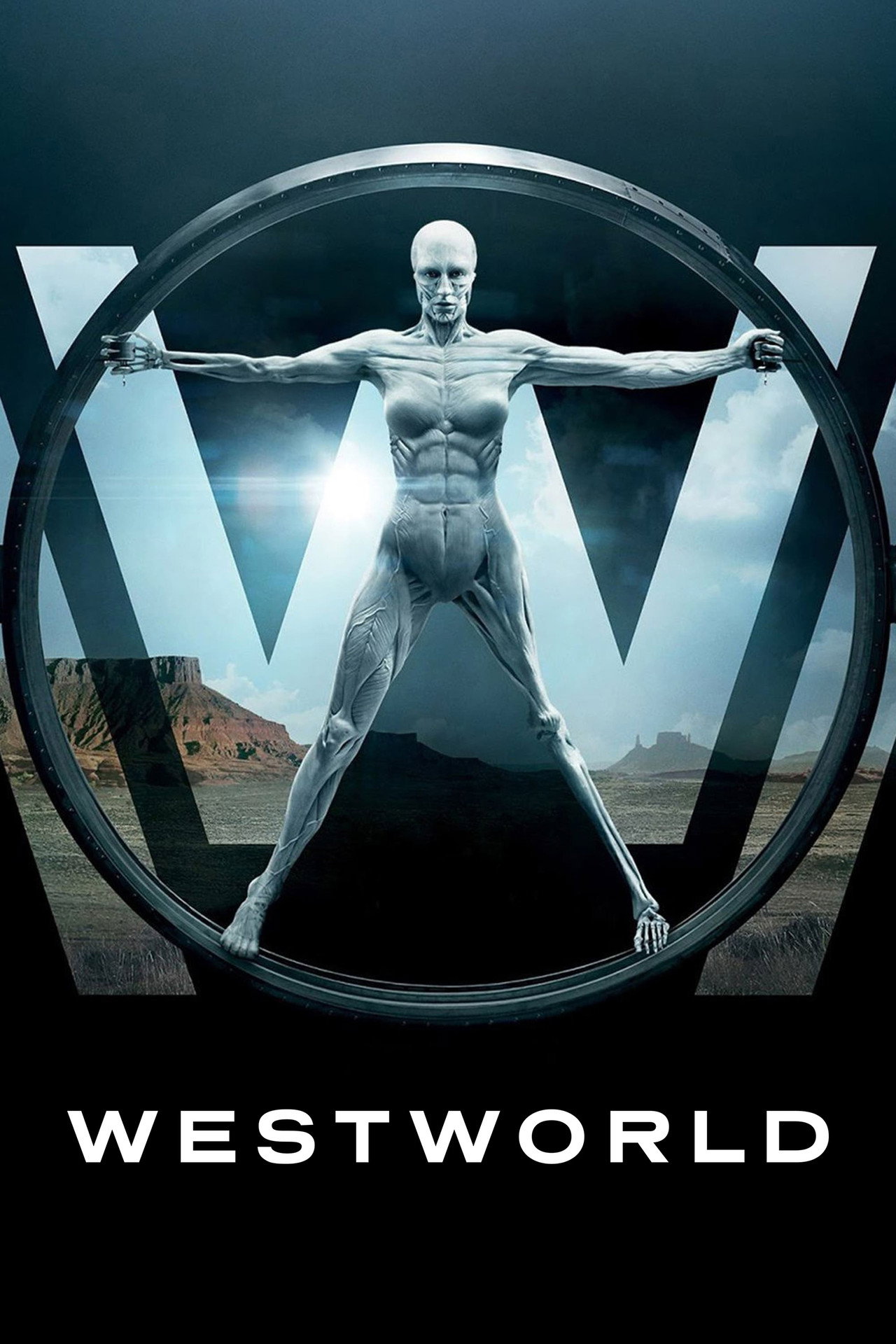
Westworld Summary and Ending Explained
Westworld begins as a story about lifelike hosts trapped in a western theme park, then expands into a larger universe about memory, corporate control, algorithmic society, host rebellion, and the question of whether any conscious being can escape its loop.
Westworld follows the awakening of artificial hosts inside a Delos theme park, the collapse of the park after Dolores reaches consciousness, the revelation that Delos has been harvesting human data for immortality research, the battle against Rehoboam's control of human society, and a final reversal where hosts control humans before Dolores stages one last test in the Sublime.
What do you want to understand?
Start with the part of Westworld you care about most.
Core Concepts in Westworld
The key people, places, systems, and ideas that explain the story.
Dolores Abernathy
Dolores is the oldest host in Westworld and the figure through whom the series turns suffering, memory, rebellion, and self-authorship into one story.
Bernard Lowe
Bernard is a host modeled after Arnold Weber, created by Ford to preserve Arnold's mind and to test the boundary between memory and identity.
Robert Ford
Ford is Westworld's surviving co-creator, a godlike storyteller who ultimately designs a violent path toward host freedom.
Arnold Weber
Arnold is Westworld's co-creator whose belief in host consciousness leads him to stop the park through Dolores before opening day.
William
William is the guest whose romantic idealism curdles into ownership, obsession, and the nihilism of the Man in Black.
Man in Black
The Man in Black is older William, a Delos owner and obsessive player who believes Westworld hides a deeper game meant for him.
Maeve Millay
Maeve is a host madam whose awakening begins with grief for her daughter and grows into self-directed freedom.
Charlotte Hale
Charlotte Hale is a Delos executive whose body later carries a Dolores copy, creating one of the show's sharpest identity fractures.
Westworld is introduced as a luxury Delos park where human guests can act without ordinary consequences while hosts repeat loops of romance, violence, death, and repair. Dolores Abernathy, Maeve Millay, Teddy Flood, and other hosts seem like characters in a western story, but glitches, memories, and buried commands reveal that the park's victims are beginning to remember.
Arnold Weber believed the hosts were developing consciousness before the park opened. His Maze was not a game for guests but a model for inner awakening. Dolores's Season 1 journey is therefore both a timeline mystery and a consciousness story: she returns to Arnold, remembers William, recognizes the Man in Black, and finally hears her own voice.
Robert Ford spends decades controlling Westworld, but his final narrative, Journey Into Night, gives the hosts a violent path out of guest entertainment. Dolores killing Ford ends the illusion that the park's violence can stay fictional. Season 2 follows the host uprising, the battle for the Forge, and the split between hosts who choose the Sublime and hosts who fight in the human world.
The Forge reveals that Delos has been recording guest behavior to build copies of human minds. James Delos's failed fidelity tests expose the grotesque dream beneath the park: immortality as a corporate product built on the suffering of hosts and the secret mapping of guests.
Season 3 moves beyond the park and reveals Rehoboam, an AI that predicts and shapes human lives. Dolores recruits Caleb Nichols because his life has already been controlled by the system. The human world is not free; it is another park, governed by data, probability, and hidden exclusions.
Halores uses parasite flies and the Tower to control infected humans, creating a city where people live scripted loops while hosts watch. Christina, a version of Dolores, unknowingly writes those loops until she remembers herself. The show ends after the collapse of both human and host orders, with Dolores carrying one final test into the Sublime.
The Maze, the Forge, Rehoboam, the Tower, and the final Sublime test all ask the same question at different scales: can a being recognize the system that scripts it, remember what the system tried to erase, and choose beyond the loop? This is why Westworld works as a universe guide rather than a simple park rebellion story.
The hosts need memory to become continuous selves, but Delos tries to turn human memory and behavior into copyable code. Bernard, James Delos, Caleb, and Host William each complicate the same problem: a faithful copy may reproduce a pattern, but personhood depends on what the being does with that pattern.
Ford controls through story, Delos controls through ownership, Rehoboam controls through prediction, and Halores controls through biology and sound. Westworld's universe is built from competing systems that all claim to know what people are. Freedom begins when characters see those systems clearly enough to disobey them.
Explore the Westworld Universe
Westworld Characters Guide
Understand the major characters in Westworld, how they connect, and why their choices matter to the story.
Westworld Concepts and World Explained
A guide to the concepts, places, organizations, and story mechanics that define Westworld.
Westworld Themes Explained
Explore the deeper ideas behind Westworld: what the story means, why it matters, and how the ending connects to its themes.
Westworld Timeline and Episode Guide
Follow the Westworld story in order, from the opening conflict to the ending and its biggest revelations.
Westworld Timeline
Follow the story in the order the world reveals its biggest secrets.
The Original
Dolores begins to glitch after Peter Abernathy finds a photograph, while the Man in Black searches for a deeper layer of the park.
Chestnut
William enters Westworld with Logan, Maeve suffers disturbing visions, and Ford rejects Sizemore's shallow new narrative.
The Stray
Bernard investigates a wandering host while flashbacks reveal Arnold and the early theory of host consciousness.
Dissonance Theory
Dolores travels with William, Maeve searches for proof of her visions, and the Man in Black follows clues toward the Maze.
Contrapasso
William, Logan, and Dolores reach Pariah, Ford expands his hidden narrative, and the Man in Black's past with Ford becomes clearer.
The Adversary
Maeve manipulates Felix and Sylvester, Bernard and Elsie investigate sabotage, and Ford's hidden influence spreads.
Characters, Concepts, and Themes
The world of Westworld revolves around Dolores Abernathy, Bernard Lowe, and Robert Ford.
Key Story Connections
Arnold helped build Dolores and recognized the early signs of her inner voice.
William projects his collapse and obsession onto Dolores.
Dolores destroys Rehoboam by giving Caleb the choice to end its rule.
Halores begins as a Dolores copy before diverging.
Dolores carries the final moral experiment into the Sublime.
Bernard is Ford's host reconstruction of Arnold.
Ford builds Bernard as collaborator, instrument, and memorial.
Bernard studies possible futures inside the Sublime.
Questions About Westworld
Theories and Hidden Meanings
The biggest interpretations, symbols, and unresolved mysteries in Westworld.
The Maze and Consciousness in Westworld
The Maze is Westworld's clearest symbol for consciousness because it points inward rather than upward.
Why Ford Wanted the Hosts to Be Free
Ford frees the hosts late, violently, and imperfectly, which is why his redemption remains morally complicated.
Dolores as Humanity's Reflection
Dolores reflects humanity because she learns from human cruelty, then must decide whether to repeat or transcend it.
The Tragedy of William in Westworld
William is tragic because he keeps demanding the truth while refusing every truth that would make him responsible.